Sustainable coating materials

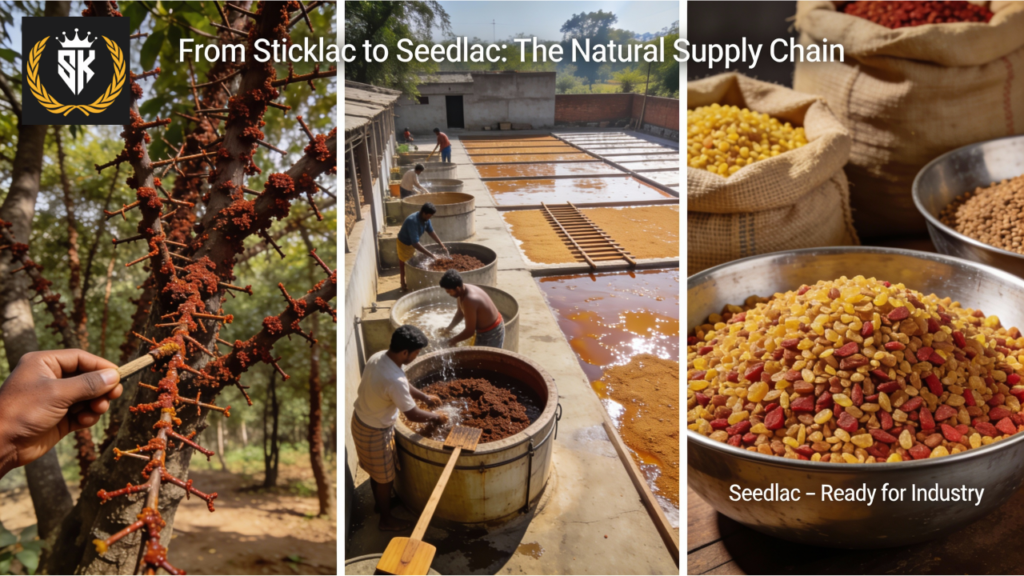
From Sticklac to Seedlac: Understanding the Raw Material Supply Chain and QualityControl

Every single finished shellac product, from the glistening glaze on a jelly bean to the Frenchpolish on a priceless antique table, starts its journey in the exact same place: on the branch ofa tree in the forests of India or Thailand. Understanding this journey from the raw, naturalsource to the processed industrial material is crucial […]

From Sticklac to Seedlac: Understanding the Raw Material Supply Chain and QualityControl Read More »
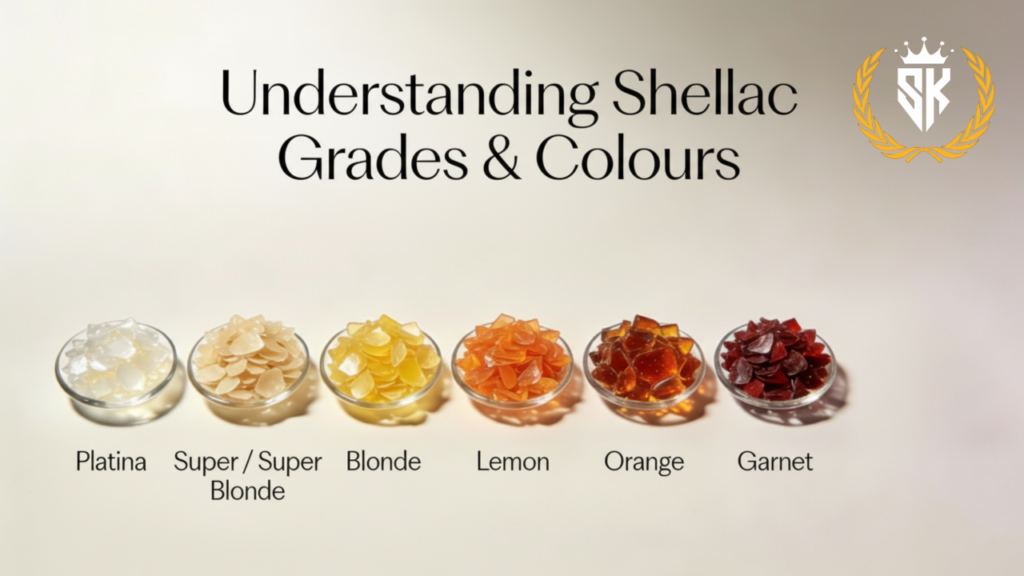
Understanding Shellac Grades and Colours: From Super Blonde to Garnet to Button

One of the most confusing aspects of buying shellac, whether you are a professionalwoodworker looking for the perfect finish or an industrial buyer sourcing raw materials, is thebewildering array of names, grades, and colours available on the market. From “Platina” and“Super Blonde” to “Lemon,” “Orange,” “Garnet,” and “Button,” the terminology can be opaque,inconsistent, and confusing.

Understanding Shellac Grades and Colours: From Super Blonde to Garnet to Button Read More »

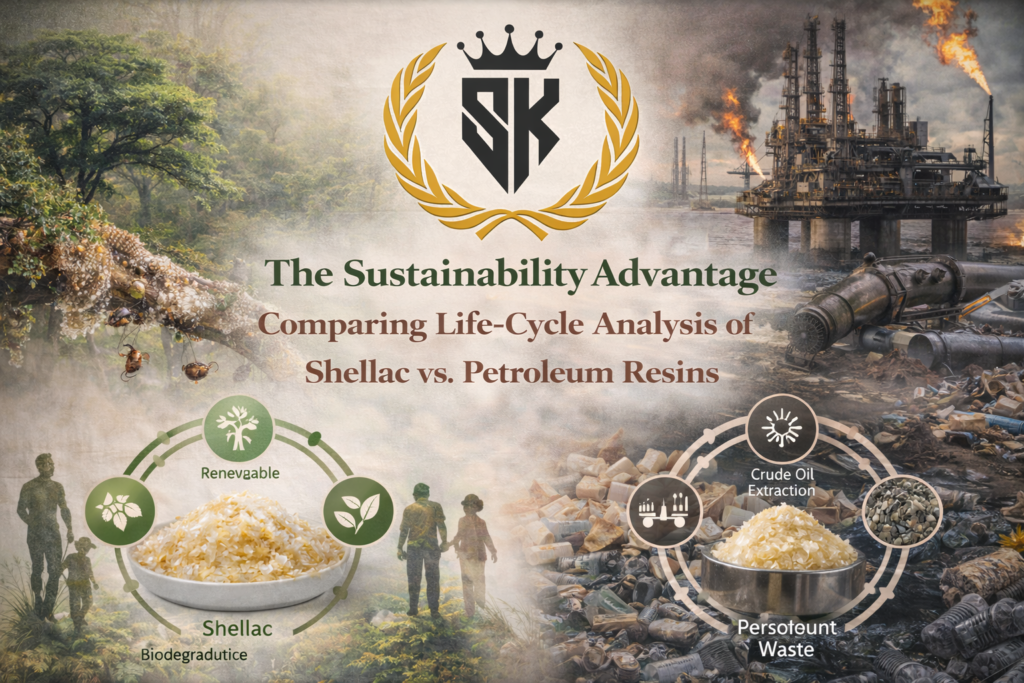
The Sustainability Advantage: Comparing Life-Cycle Analysis of Shellac vs. PetroleumResins

In boardrooms and R&D labs across the globe, one directive is becoming universal andinescapable: Sustainability. Industries ranging from packaging and food to cosmetics andpaints are under immense pressure from consumers, regulators, and investors to reduce theirenvironmental footprint and move away from finite, fossil-fuel-derived materials. In this urgentsearch for sustainable coating materials and binders, an ancient

The Sustainability Advantage: Comparing Life-Cycle Analysis of Shellac vs. PetroleumResins Read More »

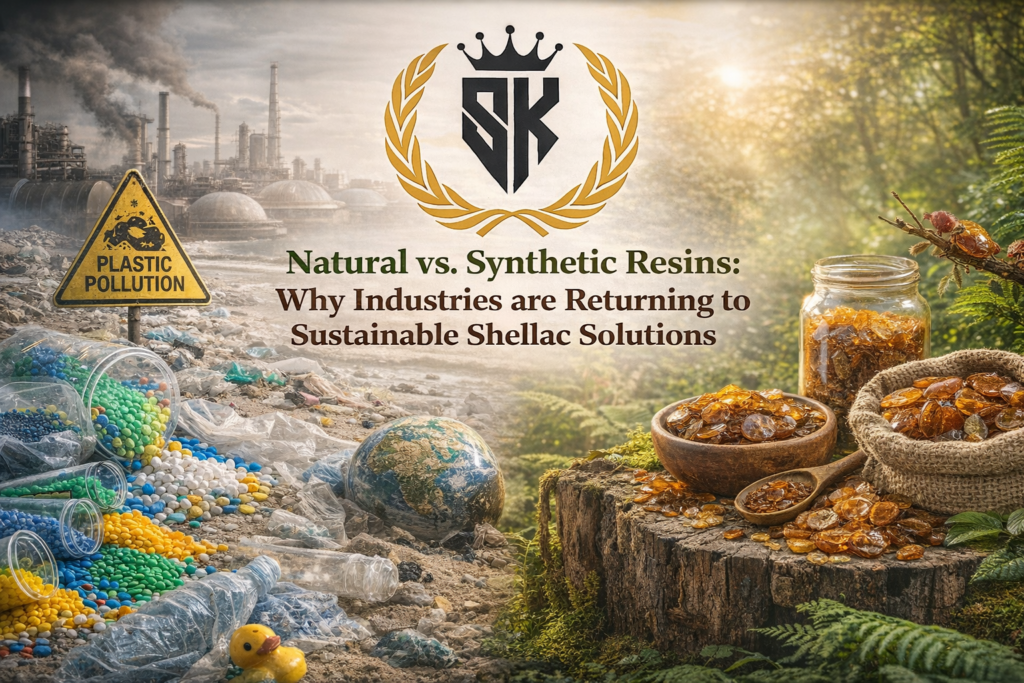
Natural vs. Synthetic Resins: Why Industries are Returning to Sustainable Shellac Solutions

For the past century, the story of industrial materials and manufacturing has been dominatedby the meteoric rise of synthetics. Petroleum-based plastics and resins promised unparalleledperformance, consistency, versatility, and, perhaps most importantly, low cost. This pushedmany traditional natural materials, which were perceived as inconsistent or old-fashioned, tothe sidelines of manufacturing. But the tide is turning rapidly.

Natural vs. Synthetic Resins: Why Industries are Returning to Sustainable Shellac Solutions Read More »