emailsunnysahu@gmail.com

Historical Tech to Modern Application: Button Lac in Electrical Insulation and SealingWax

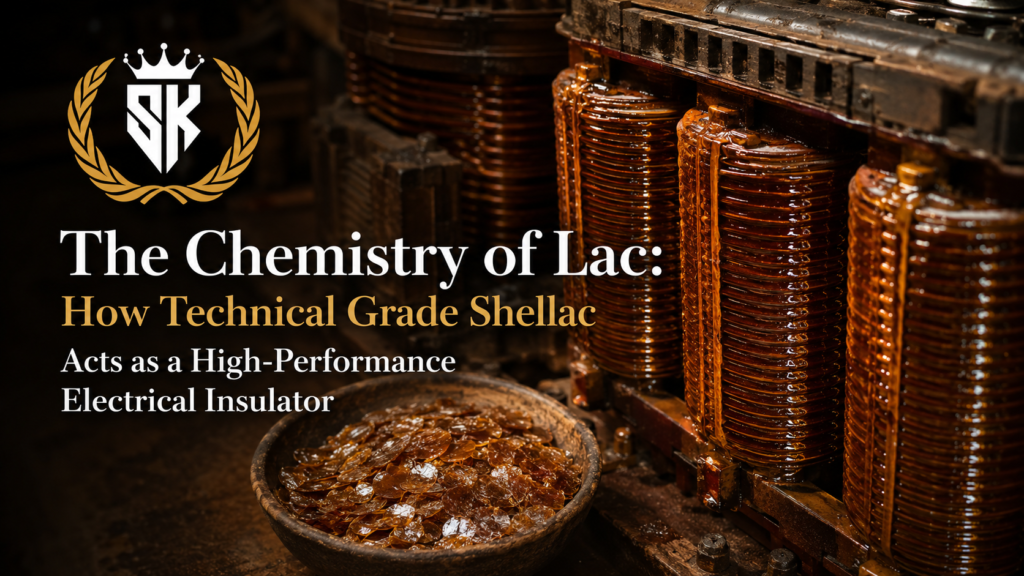
In our high-tech world dominated by silicon chips, fiber optics, and advanced syntheticpolymers, it’s easy to forget the materials that laid the groundwork for the electrical age. Longbefore modern synthetic plastics like Bakelite or PVC became available, shellac was a premierindustrial material, prized not just for its finish but for its remarkable functional properties.Today, while […]

Historical Tech to Modern Application: Button Lac in Electrical Insulation and SealingWax Read More »

Beyond the Varnish: The Role of Shellac in Felt Hat Stiffening and Textile Sizing

When you think of shellac, you probably think of shiny wood floors, French-polished antiquefurniture, or perhaps even the glossy coating on your favorite candies. You probably don’tthink of the hat sitting on your head. Yet, for centuries, the millinery (hat-making) industry hasbeen one of the most important, consistent, and demanding consumers of shellac. From acrisp,

Beyond the Varnish: The Role of Shellac in Felt Hat Stiffening and Textile Sizing Read More »

High-Value Chemical Synthesis: Aleuritic Acid as a Precursor for Perfumes and GrowthRegulators

Shellac is famous globally as a natural resin used for coatings, finishes, and binders inindustries ranging from food to furniture. But its value extends far beyond its physicalproperties as a polymer. Hidden within the complex chemical structure of the shellacmolecule is a treasure trove for organic chemists and industrial formulators. The most valuablejewel in this

High-Value Chemical Synthesis: Aleuritic Acid as a Precursor for Perfumes and GrowthRegulators Read More »

Industrial Grinding Wheels and Abrasives: Using Shellac as a Thermal-Setting Binder

When you think of heavy industry, you likely picture sparks flying from a massive grindingwheel smoothing a giant steel casting in a foundry, or the precision polishing of a delicatecrankshaft in an automotive plant. In these abrasive processes, the abrasive grainsthemselves (like aluminum oxide, silicon carbide, or diamond) do the actual cutting work. Butit’s the

Industrial Grinding Wheels and Abrasives: Using Shellac as a Thermal-Setting Binder Read More »

From Sticklac to Seedlac: Understanding the Raw Material Supply Chain and QualityControl

Every single finished shellac product, from the glistening glaze on a jelly bean to the Frenchpolish on a priceless antique table, starts its journey in the exact same place: on the branch ofa tree in the forests of India or Thailand. Understanding this journey from the raw, naturalsource to the processed industrial material is crucial

From Sticklac to Seedlac: Understanding the Raw Material Supply Chain and QualityControl Read More »

Waxy vs. Dewaxed Shellac: A Definitive Technical Guide for Industrial Buyers

For industrial buyers, formulators, and professional end-users, choosing the right shellac isn’tjust about picking a colour from a chart; it’s about understanding the underlying chemistryand how it affects performance. The single most critical technical distinction in the shellacworld and the one that causes the most confusion and application failures is betweenstandard “waxy” grades and refined

Waxy vs. Dewaxed Shellac: A Definitive Technical Guide for Industrial Buyers Read More »

Understanding Shellac Grades and Colours: From Super Blonde to Garnet to Button

One of the most confusing aspects of buying shellac, whether you are a professionalwoodworker looking for the perfect finish or an industrial buyer sourcing raw materials, is thebewildering array of names, grades, and colours available on the market. From “Platina” and“Super Blonde” to “Lemon,” “Orange,” “Garnet,” and “Button,” the terminology can be opaque,inconsistent, and confusing.

Understanding Shellac Grades and Colours: From Super Blonde to Garnet to Button Read More »

The Sustainability Advantage: Comparing Life-Cycle Analysis of Shellac vs. PetroleumResins

In boardrooms and R&D labs across the globe, one directive is becoming universal andinescapable: Sustainability. Industries ranging from packaging and food to cosmetics andpaints are under immense pressure from consumers, regulators, and investors to reduce theirenvironmental footprint and move away from finite, fossil-fuel-derived materials. In this urgentsearch for sustainable coating materials and binders, an ancient

The Sustainability Advantage: Comparing Life-Cycle Analysis of Shellac vs. PetroleumResins Read More »

The Master Buyer’s Guide: How to Select the Right SK Shellac Product for Your Industry

Shellac is not a single, uniform commodity product; it is a versatile and complex family ofnatural resins with diverse properties tailored for specific industrial applications. As a leadingglobal shellac supplier in India since 1980, SK Shellac manufactures a complete range of lacproducts to meet the varied and demanding needs of global industry, from pharma tofurniture.

The Master Buyer’s Guide: How to Select the Right SK Shellac Product for Your Industry Read More »

Natural vs. Synthetic Resins: Why Industries are Returning to Sustainable Shellac Solutions

For the past century, the story of industrial materials and manufacturing has been dominatedby the meteoric rise of synthetics. Petroleum-based plastics and resins promised unparalleledperformance, consistency, versatility, and, perhaps most importantly, low cost. This pushedmany traditional natural materials, which were perceived as inconsistent or old-fashioned, tothe sidelines of manufacturing. But the tide is turning rapidly.

Natural vs. Synthetic Resins: Why Industries are Returning to Sustainable Shellac Solutions Read More »