
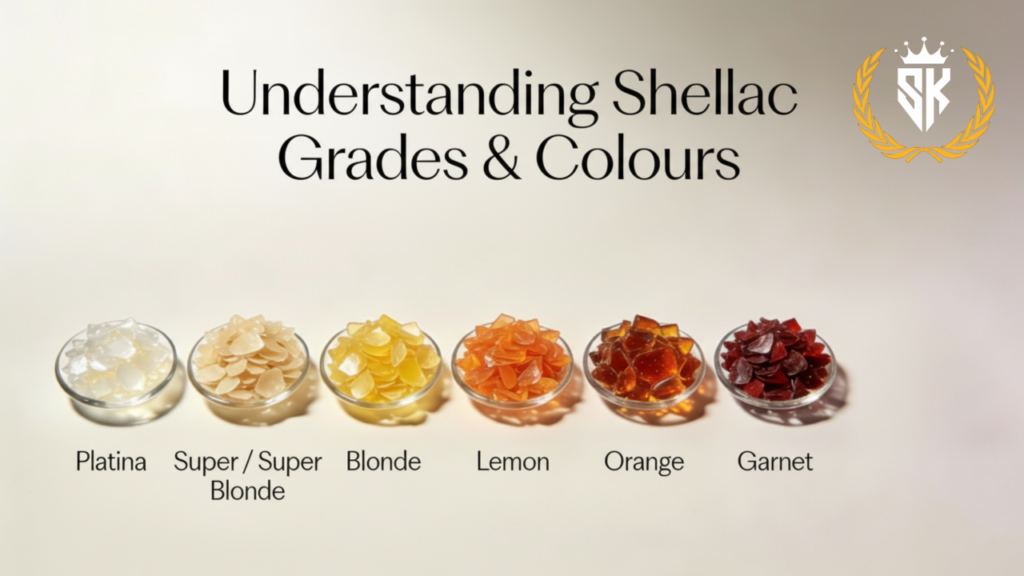
One of the most confusing aspects of buying shellac, whether you are a professional woodworker looking for the perfect finish or an industrial buyer sourcing raw materials, is the bewildering array of names, grades, and colours available on the market. From “Platina” and “Super Blonde” to “Lemon,” “Orange,” “Garnet,” and “Button,” the terminology can be opaque, inconsistent, and confusing. This guide is designed to help you navigate the shellac colour chart, understand the origins of these colors, and determine what these grades actually mean for your specific application.
Where Does the Colour Come From?
The natural colour of shellac resin varies significantly, ranging from a very pale, almost transparent straw yellow to a deep, dark red-brown. This variation depends primarily on two key factors:
The Host Tree & Geography: The type of tree sap the lac insect feeds on directly influences the colour and quality of the resin it produces. For example, lac sourced from the Kusmi tree is typically lighter in color and of higher quality than lac from other host trees like Palas or Ber. The geographical region and climate also play a role.
Processing & Refining: The method of washing the raw seedlac to remove the natural red lac dye, and any subsequent heat treatment during manufacturing (like the heat used to make button lac or machine-made flakes), can darken the resin. Bleaching is a chemical process used to remove color entirely.
A Guide to Common Shellac Grades
Here is a breakdown of the most common grades you will encounter, from lightest to darkest:
- Bleached / Bone Dry: This shellac has been chemically treated (usually with chlorine) to remove all natural colour pigments. It is typically sold as a fine white powder. It is virtually clear when dissolved and applied. It is used when absolutely no colour change to the substrate is desired, such as on white woods like holly or maple, or for clear food coatings where color neutrality is key.
- Dewaxed Platina / Super Blonde: These are the lightest grades of natural, unbleached shellac available. They are highly refined from the best seedlac and have had the wax removed. They have a very pale straw or pale golden colour.
- Platinum vs. Blonde Shellac: “Platinum” (or Platina) is typically specified as slightly lighter than “Super Blonde,” but in practice, they are often used interchangeably for applications requiring near-invisibility on light woods, adding just a hint of warmth without a distinct yellow cast.
- Dewaxed Blonde / Lemon: A step down in lightness, these grades have a distinct, warm golden-yellow hue. They are superb for enhancing the grain and bringing out the chatoyance of woods like oak, cherry, and pine, giving them a rich, “aged” look without being too dark or orange.
- Dewaxed Orange: This grade has a deeper, richer amber colour. This is the classic “shellac colour” associated with vintage woodwork and antique furniture. It imparts a significant warm, golden-orange tone to anything it is applied to.
- Dewaxed Garnet: This is the darkest of the dewaxed flake grades, with a deep, rich brownish-red tone, similar to the gemstone.
- Garnet shellac uses: It is prized for use on dark woods like mahogany or walnut to deepen the colour, enrich the grain, and hide imperfections, or to give new, pale wood an instant antique or aged appearance.
- Button Lac: As discussed in other posts, this is a traditional, waxy form of shellac sold as thick discs. It typically ranges from a warm orange to a darker, somewhat turbid brown colour due to the presence of wax and the heat used in its processing. It is valued for its traditional look, feel, and patination properties in restoration work.
Understanding shellac grades is fundamentally about matching the right colour and wax content to your specific project needs, whether aesthetic or functional. SK Shellac offers a comprehensive range across this entire spectrum, ensuring consistent colour and quality in every batch, so you can achieve the precise result you desire.