
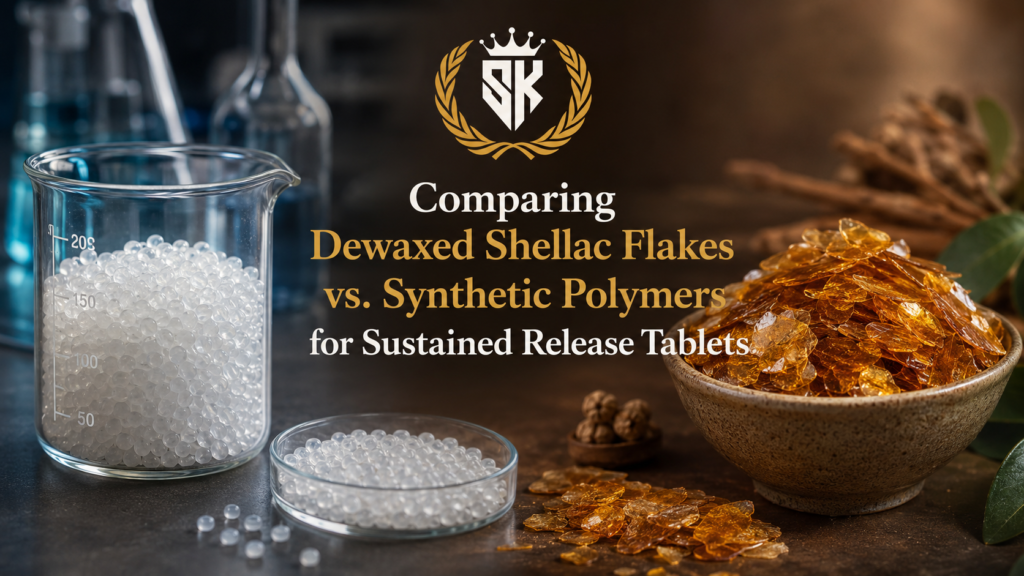
R&D teams in the pharmaceutical sector are constantly balancing tablet performance with clean regulatory paths.
When building sustained-release profiles, the goal is simple: control the erosion rate of the tablet matrix so the
active ingredient releases steadily over hours. For years, synthetic options like HPMC or ethyl cellulose have
dominated the space. But as clean-label initiatives move from food into pharma, dewaxed shellac flakes are
proving that natural polymer coatings can match, and sometimes exceed, synthetic performance.
The Hidden Risks of Synthetic Matrix Degradation
The main issue with synthetic polymers is often their synthetic processing byproducts and how they interact with
sensitive APIs. Many synthetic polymers are highly hydrophilic, meaning they absorb ambient moisture easily
during storage. This can lead to premature tablet softening or unexpected chemical degradation of the active
molecule. Premium dewaxed shellac flakes, by contrast, offer built-in hydrophobic properties. This natural
moisture barrier protects the internal ingredients during storage while providing a highly stable, hydrophobic
matrix for controlled erosion once ingested.
Physical Mechanics of Natural Binders on High-Speed Presses
When used as a tablet binding agent or a matrix former, dewaxed shellac slows down water penetration.
Instead of the tablet dissolving all at once, liquid enters the matrix slowly, dissolving the active ingredient and
letting it diffuse out at a highly predictable rate. Because the natural wax has been completely stripped out during
processing, these flakes dissolve smoothly in ethanol or aqueous alkaline solutions without leaving behind any
sticky, unrefined residues that could foul up high-speed rotary tablet presses.
Formulation Upgrades Without Structural Redesign
Choosing between natural and synthetic pharmaceutical excipients doesn’t mean sacrificing technical control.Sourcing highly refined, reliable natural polymer coating stocks allows pharmaceutical manufacturers to hit
their target dissolution curves while meeting the growing market demand for clean, bio-based ingredients. It is an
efficient way to modernize legacy formulations without starting from scratch in the lab.