
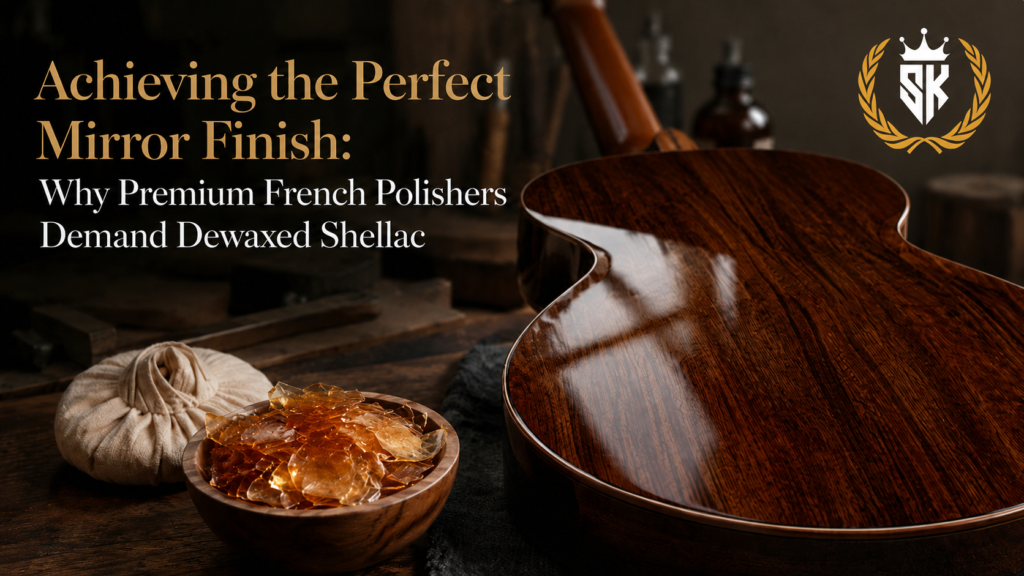
French polishing is arguably the most demanding finishing technique in the entire woodworking world. It requires
building up hundreds of ultra-thin layers of spirit varnish using a specialized polishing pad, known as a fad or
rubber. The goal is to create a flawless, deep mirror wood finish that seems to float right on top of the wood
grain. For master luthiers, high-end furniture makers, and antique restorers, choosing the right french polish
shellac supplier is a make-or-break decision. And if you ask any master polisher, they will tell you the exact
same thing: you must use premium dewaxed flakes.
The Microscopic Problem with Natural Lac Wax
To understand why, you have to look at the chemistry of the finish. Standard waxy shellac contains around 5%natural lac wax. When you apply one or two coats of waxy shellac, that wax isn’t an issue. However, French polishing requires applying dozens of microscopic layers over several days. If you use a waxy shellac, that natural
wax builds up between every single layer. The result? A muddy, soft finish that scratches easily, lacks depth, and
obscures the beautiful figuring of high-value woods like mahogany, walnut, or curly maple.
Three-Dimensional Refraction and Molecular Adhesion
By switching to premium dewaxed flakes, you are working with a pure, stripped resin. The optical clarity ofdewaxed shellac is unmatched. It allows light to pass completely through the finish, striking the wood fibers and
reflecting back out, giving the wood that iconic three-dimensional, glowing look. Because there is zero wax
present, the layers bond together on a molecular level, creating a much harder, more durable finish that resists water
rings and minor surface abrasions far better than standard unrefined varnishes.
Craftsmanship Protection via Pure Inputs
Whether you are restoring a priceless 18th-century antique or finishing a custom, concert-grade acoustic guitar, youneed raw materials that match your level of craftsmanship. Utilizing a dedicated traditional wood restoration
resin that is factory-processed to remove every trace of wax ensures a smooth, worry-free application process
and a timeless, flawless gloss that synthetic alternatives can never replicate.