
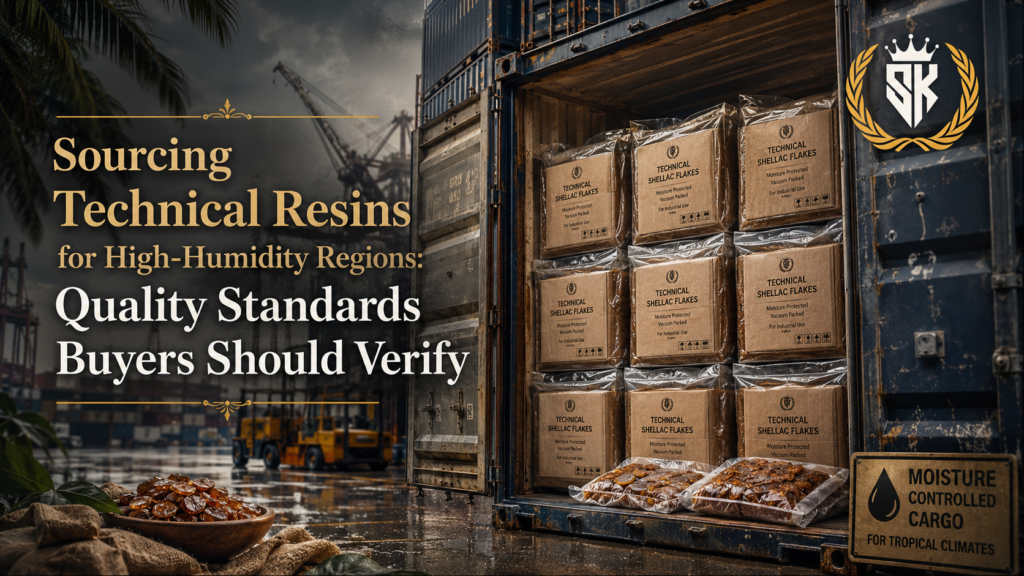
Procurement teams operating in tropical or high-humidity regions face unique material handling obstacles. Natural
bio-polymers like shellac are inherently reactive to atmospheric conditions. If your supply chain lacks proper
environmental safeguards, raw materials can easily degrade before they ever reach your production floor. When
importing shellac to Africa or other tropical manufacturing hubs, understanding the strict quality assurance
natural resins require is essential to protecting your capital investment.
The Threat of Thermal Blockiness and Flake Fusion
The single most common issue buyers encounter in hot, humid climates is blockiness or “clumping.” Shellac flakespossess a relatively low natural softening point. If bulk shipments are exposed to high ambient heat or moisture
during ocean transit or warehouse storage, the flakes will naturally soften, stick together, and fuse into a hard, solid
mass. To prevent this, smart procurement managers must mandate strict bulk shellac storage standards,
requiring suppliers to utilize specialized, moisture-barrier packaging and climate-controlled shipping logistics.
The Chemical Mechanism of Ambient Self-Polymerization
Additionally, buyers must monitor the moisture content specified on the product’s Certificate of Analysis (CoA). Ifthe residual moisture inside a batch of shellac flakes or bleached powder exceeds 2% to 3% at the time of packing,
the rate of natural self-polymerization increases dramatically in hot climates. Over-polymerized shellac loses its
solubility in alcohol and becomes impossible to dissolve on the production line, severely shortening the
industrial resin shelf life and leading to massive raw material waste.
Pre-Shipment Quality Testing Parameters
To protect your manufacturing efficiency, your procurement team should only partner with exporters who provideclear, verifiable pre-shipment quality testing. Demanding rigorous moisture controls and specialized packaging
standards ensures that your raw materials arrive at your factory fully functional, physically stable, and ready to
perform perfectly on your assembly lines, regardless of regional weather challenges.