
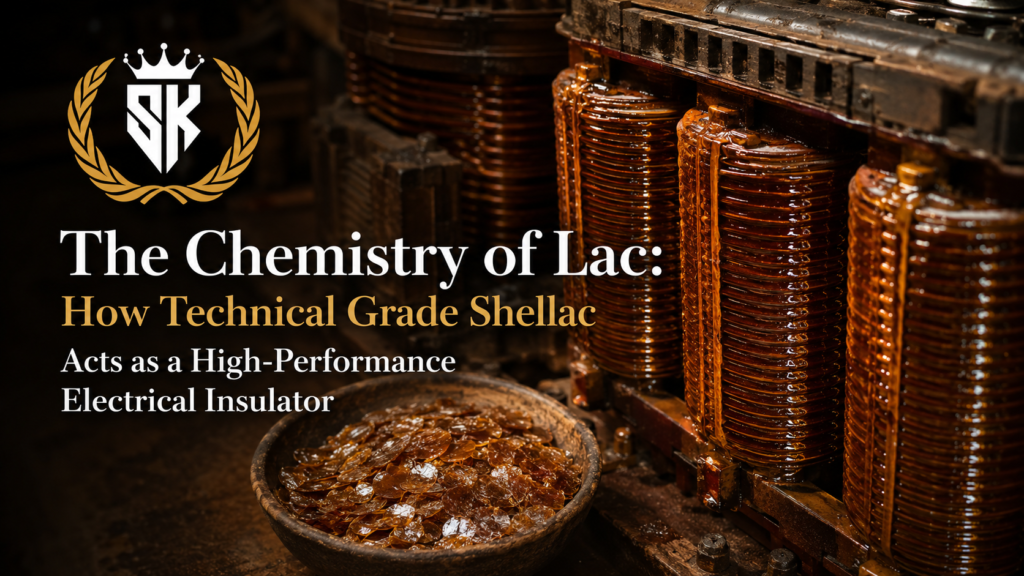
Long before modern synthetic plastics like Bakelite, PVC, or epoxy resins existed, the early electrical age was
insulated entirely by a natural material: technical grade shellac. And while synthetic polymers have taken over
high-volume commercial wiring, high-purity natural lac continues to be a premier choice for specialized
electrical insulation varnish in heavy industrial transformers, electric motors, and high-voltage power
generation equipment.
The Molecular Network of Polyhydroxy Fatty Acids
The secret behind shellac’s electrical performance lies in its complex molecular structure. It is not a simplehydrocarbon chain; it is a dense network of polyhydroxy fatty acids. This unique composition gives it a remarkably
high natural dielectric breakdown voltage. When applied as a protective coating over copper motor windings or
electrical busbars, shellac forms a continuous, micro-thin insulating barrier that prevents electrical current from
jumping across circuits, even when subjected to intense operational voltages.
Defeating Carbon Tracking Defects under High Voltage
Another massive advantage of a natural dielectric resin like shellac is its exceptional tracking resistance.Carbon tracking occurs when an electrical insulation material degrades under high electrical stress, leaving behind
a conductive path of carbon that causes short circuits and catastrophic component failures. Many synthetic resins
carbonize easily under heat and electrical arcing. Shellac, by contrast, possesses a unique chemical structure that
resists this erosion, making it highly reliable for heavy-duty industrial switchgear and power distribution units.
VOC Compliance and Thermal Expansion Adaptability
Furthermore, shellac is completely alcohol-soluble, meaning industrial lines can apply it without resorting to highlytoxic petroleum solvents. It air-dries rapidly, forming a tough, resilient, and slightly flexible film that handles the
natural thermal expansion and contraction of heavy electrical equipment. Sourcing factory-direct industrial lac
insulation allows electrical component manufacturers to improve tracking resistance, simplify their
environmental compliance workflows, and tap into a timeless, proven engineering asset.