
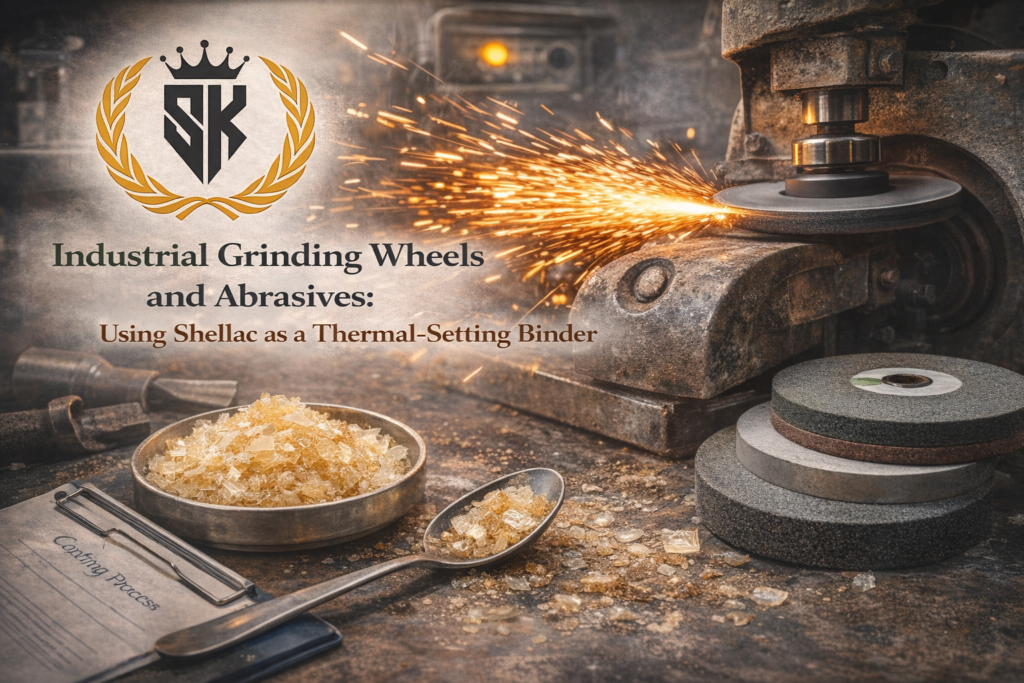
When you think of heavy industry, you likely picture sparks flying from a massive grinding wheel smoothing a giant steel casting in a foundry, or the precision polishing of a delicate crankshaft in an automotive plant. In these abrasive processes, the abrasive grains themselves (like aluminum oxide, silicon carbide, or diamond) do the actual cutting work. But
it’s the binder that is the unsung hero, as it holds these grains together in the shape of a wheel, dictates how hard or soft the wheel acts, and determines how it performs under heat and pressure.
While modern synthetic phenolic resins dominate much of the high-speed grinding market today, shellac remains a critical, specialized binder for specific high-performance abrasive applications due to its unique thermal properties that synthetics cannot match.
Types of Grinding Wheel Bonds
Grinding wheels are classified by their bonding material, which significantly affects their performance characteristics. The main types are:
● Vitrified (Glass/Ceramic Bond): These are very rigid, porous, and fired at high temperatures. They are excellent for precision grinding but can be brittle.
● Resinoid (Synthetic Resin Bond): These are tough and resilient, designed for high-speed, heavy-duty grinding operations like rough snagging.
● Shellac Bond: This is a niche but vital category suited for specific, demanding applications where finish quality and cool cutting are paramount.
Why Use a Shellac Binder?
Shellac acts as a thermosetting resin in this context, meaning it hardens permanently when heated during the wheel’s manufacture. However, its thermal properties during actual grinding use are unique compared to synthetic resins.
- Cool Cutting Action: Shellac has a relatively low softening point compared to other binders. During the grinding process, the intense heat of friction generated at the point of contact causes the shellac binder to soften slightly. This controlled softening allows dull, worn abrasive grains to be shed more easily from the wheel’s surface, automatically exposing fresh, sharp grains underneath. This “self-sharpening” action results in a veryfree-cutting and cool-grinding wheel, significantly reducing the risk of burning, metallurgical damage, or heat-checking sensitive workpieces like thin saw blades, cutlery, or hardened steel rolls.
- Smooth Finish: Shellac-bonded wheels are known for producing very fine, high-quality finishes with low surface roughness (low Ra values). They are often used in final finishing and polishing operations where a flawless surface is required.
- Elasticity: Shellac provides a degree of resilience or “give” in the wheel structure that brittle ceramic bonds lack, which can be beneficial in certain precision grinding operations to prevent chatter and improve surface quality.
Applications
- You will typically find shellac acting as a natural binder for abrasives in specialized applications such as:
- Thin cut-off wheels used for precise slicing of materials where burning must be avoided.
- Large roll grinding wheels for the paper and steel industries where a flawless, mirror-like finish is required on the massive rolls.
- Saw gumming wheels used for sharpening the teeth of saws in sawmills without overheating and damaging the steel temper.
- Precision grinding of cutlery, surgical instruments, and other delicate steel parts where heat buildup must be minimized.
Conclusion:
In the demanding world of industrial abrasives, the “old” ways sometimes offer performance characteristics that modern materials can’t match. SK Shellac supplies consistent, high-quality shellac powder to manufacturers of resin-bonded grinding wheels, ensuring that this unique natural bonding agent continues to play its vital role in precision manufacturing.