
Introduction:
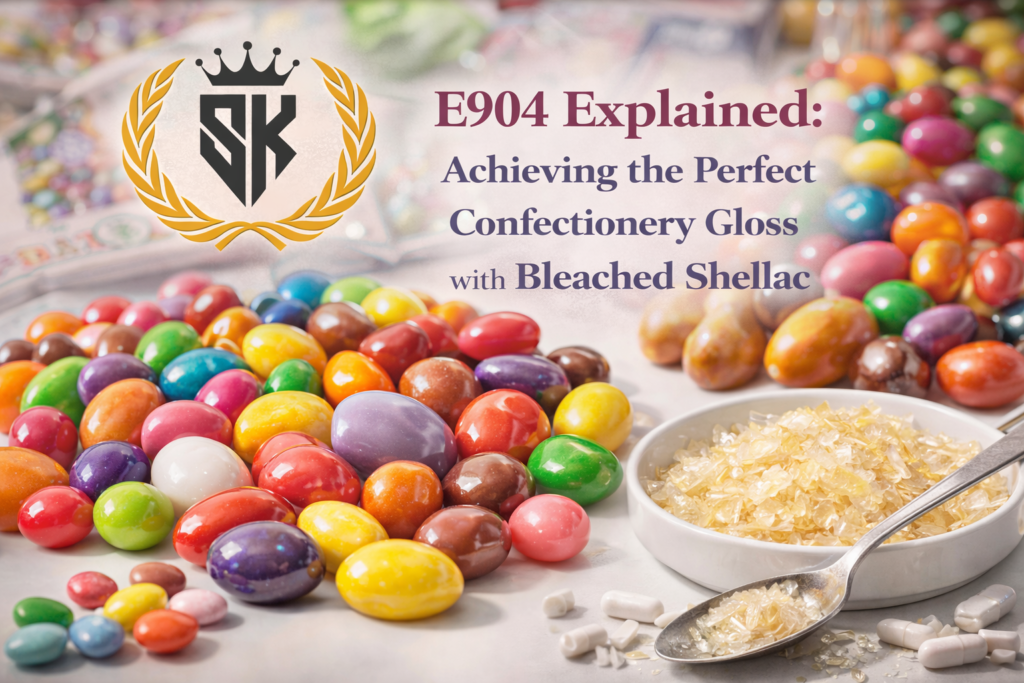
Walk down the candy aisle of any supermarket, and your eye is immediately drawn to the shine. The brilliant, almost impossible gloss of a colorful jelly bean, the lustrous, premium finish on a chocolate-covered almond, the protective sheen on a piece of chewing gum – that immediate visual appeal is critical to a product’s success on the shelf. In a crowded market, consumers buy with their eyes first. But how do manufacturers achieve that irresistible shine, and more importantly, how do they keep it looking fresh weeks or months later?
The secret often lies in a natural ingredient that has been used safely for centuries, known in the modern food industry by the code E904 food additive. You might know it better by its common name: shellac. Despite the rise of various synthetic alternatives, it remains the premier choice globally for creating high-quality, brilliant natural glazes on a wide variety of confectionery products.
Decoding E904: What exactly is it?
E904 is simply the approved food-grade designation for refined shellac, a natural resin secreted by the tiny lac insect found on trees in forests primarily in India and Thailand. It’s not a synthetic chemical born in a lab; it has a completely natural origin story. It is approved globally by major regulatory bodies, including in the European Union, Japan, and by the US FDA (as GRAS), for use as a glazing agent and surface coating. While it is often thought of just for its shine, its primary function in the food world is twofold: to provide a glossy, attractive finish and to create a functional protective barrier.
Why Confectioners Prefer Shellac Over Synthetics
As a confectionery glazing agent, shellac does much more than just make things look pretty. It offers a unique combination of functional benefits that many synthetic alternatives struggle to match in a single ingredient.
- The Unrivaled “Glassy” Shine: Shellac forms a hard, resilient film that dries to a brilliant, high-gloss finish, significantly enhancing the visual appeal of candies. In a competitive retail environment, this immediate visual impact is crucial for driving impulse purchases and conveying a sense of high product quality and freshness.
- A True Natural Coating: Today’s consumers are scrutinizing ingredient labels like never before, often actively avoiding artificial ingredients and numbered chemicals they don’t recognize. Being able to use a natural candy coating derived from a renewable insect
resin, rather than a petrochemical wax or synthetic polymer, is a significant marketing advantage for modern “clean label” brands.
- The Protective Barrier: Shellac is excellent at sealing out moisture, humidity, and oxygen. This barrier function is critical for protecting the product, extending its shelf life, preventing fats in chocolates from “blooming” (turning white), and preventing sticky pieces from clumping together in the bag, which is a common consumer complaint.
- Taste Neutral: Highly refined, food-grade shellac is virtually tasteless and odorless. This ensures that the glaze, while providing shine and protection, doesn’t interfere with the confectionery’s carefully crafted flavor profile.
The Importance of Bleached Shellac for Food Glaze
Natural shellac resin has a warm, amber or orange tint. While this might be acceptable for glazing a dark chocolate or a coffee-flavored product, it’s undesirable for many other applications. You don’t want your bright white peppermint or vibrant red jelly bean to have a yellowish cast that makes it look old.
This is where bleached shellac for food glaze becomes essential. Through a careful refining process, the natural color pigments are removed, resulting in a clear, transparent coating solution. This allows the product’s true colors to shine through brilliantly without any yellowing tint. This clarity is the perfect solution for creating a premium, shiny chocolate coating on panned goods like raisins or almonds, or for giving a final polish to colorful jelly beans and gummy candies, ensuring they look exactly as vibrant as intended.
Conclusion:
From grabbing the consumer’s attention with a brilliant, glassy shine to ensuring the product tastes as fresh as it looks weeks later, E904 is an indispensable tool for the modern confectioner. SK Shellac provides high-purity, food-grade bleached shellac that meets stringent international standards, helping manufacturers create products that look as good as they taste, naturally.