
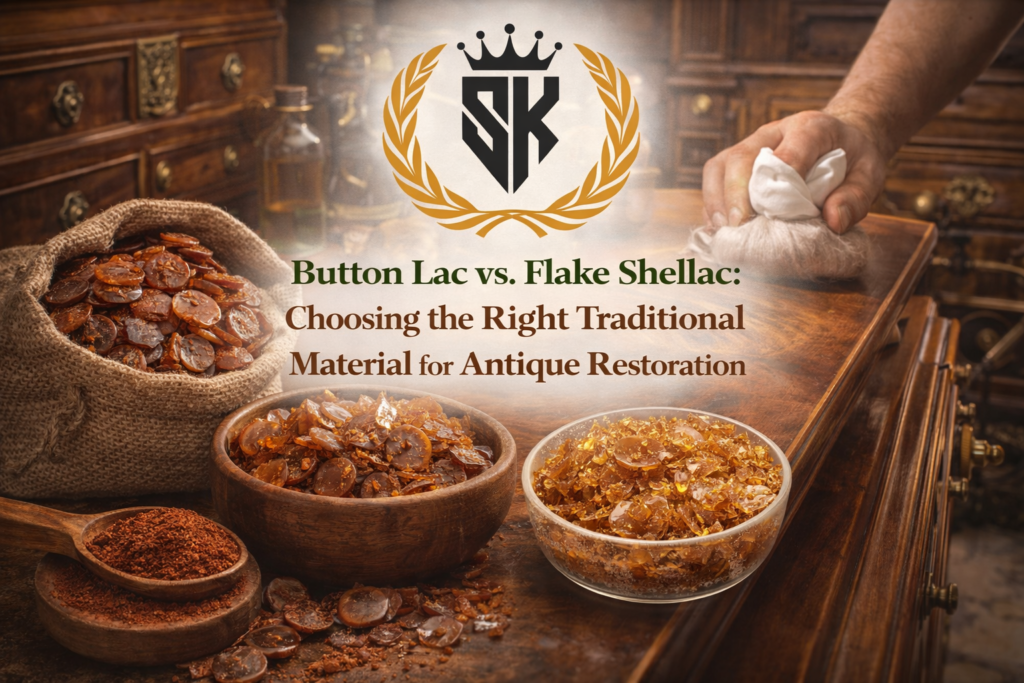
Antique restoration is not about making something look brand new; it is an art form centred on preservation, authenticity, and respect for the piece’s history and original craftsmanship. The ultimate goal is to restore its original beauty and integrity using materials and techniques that are consistent with its era of creation. When it comes to finishing fine antique furniture from the 18th and 19th centuries, shellac is the undisputed king of finishes, renowned for its beauty and reparability. However, restorers often face a choice between different traditional forms of the resin: standard flake shellac or traditional button lac. Understanding the nuanced differences between them is key to mastering antique furniture restoration techniques.
What is Button Lac?
Button lac is one of the oldest and most traditional forms of processed shellac available. Instead of the modern industrial process of stretching the molten resin into thin sheets and breaking it into flakes, the molten seedlac is simply dropped onto a flat, cool surface, traditionally a metal plate, to cool and harden into small, thick, coin-sized discs or “buttons.”
Crucially, button lac typically undergoes less refining and processing than many modern grades of dewaxed flake shellac. As a result, it retains its full natural wax content (typically 3-5%) and often has a richer, deeper, and more varied natural colour due to the heat used in its processing. This is especially true of the highly prized Kusmi button lac, which is derived from lac insects hosted on specific Kusmi trees and is known for its superior quality, hardness, and warm, golden-orange hue.
Button Lac vs. Flake Shellac in Restoration
While both forms can be dissolved in alcohol to make a French polish, they offer distinct characteristics during application and in the final look of the piece:
- Wax Content & “Feel”: The natural wax present in button lac acts as a lubricant during the intense friction of the French polishing process. This makes the polishing “rubber” or pad glide more smoothly over the surface, reducing drag and the risk of “burning” the finish. Many traditional artisans prefer this specific, controllable “feel” during application. The wax also imparts a softer, mellower, more satin-like luster compared to the harder, brighter, glassy shine of dewaxed shellac flakes. This softer sheen is often considered more appropriate and aesthetically pleasing for older antiques where a high-gloss look would feel out of place.
- Colour & Patina: The rich, natural, and sometimes slightly varied tones of button lac are unsurpassed for building a warm, authentic patina on woods like walnut, mahogany, and oak. It adds a depth of colour and a sense of age that is difficult to replicate using dyed modern finishes.
- Build & Body: Due to its thickness and less-refined processing, a solution of button lac can sometimes have more “body” and viscosity, allowing a finish to build up slightly faster on the wood surface than a thin solution of dewaxed flakes.
When to Choose Button Lac
Button lac is generally the preferred choice for a restorer when:
- Authenticity of materials and traditional methods is paramount on a valuable period piece.
- A warm, mellow, aged look with a soft sheen is desired over a brilliant, “just-finished” modern shine.
- The restorer prefers the traditional handling characteristics and lubrication of a waxy polish for their technique.
Conclusion:
For the dedicated restorer, materials matter deeply. SK Shellac’s authentic button lac connects you directly to the historic traditions of fine cabinetry and finishing. It’s not just another finish option; it’s an essential tool among traditional French polish materials for bringing history back to life with integrity, authenticity, and beauty.